Homemade puffed rice: the frying method
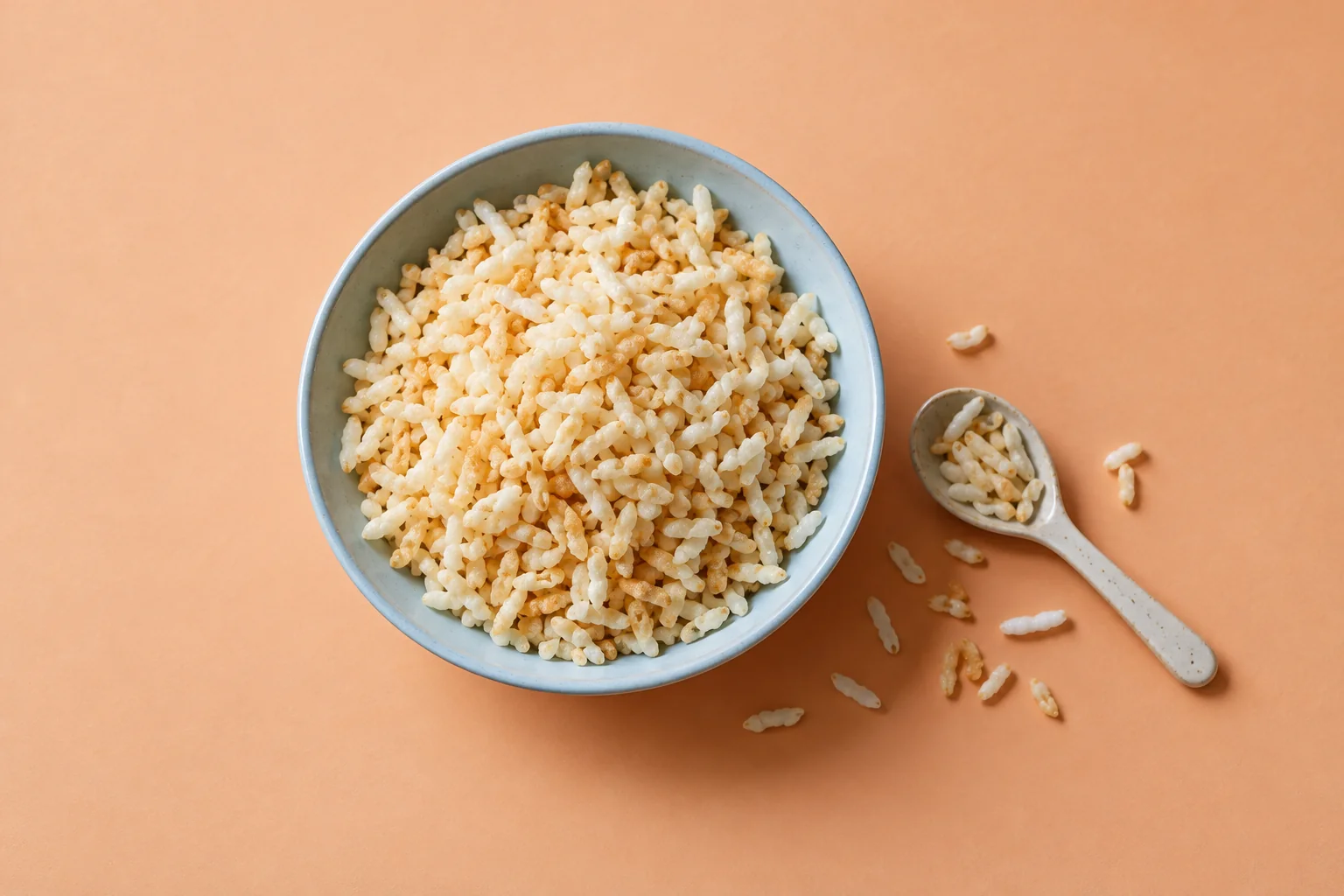
A small grain gains a little volume in seconds. At home, rice is cooked, oven-dried and then puffed in hot oil. It turns crisp, with less expansion and a different texture from industrial puffed rice.
- Approximate yield
- ≈ 90–120 g
- Preparation
- 20 min
- Cooking
- 170 min
- Resting / cooling
- 30 min
- Estimated total time
- 220 min
Times and yield are estimates: your equipment, fruit and cooling time can affect them.
The ingredients
- Raw long-grain white rice, such as jasmine100 g
- Water for cooking, drained afterwards1 L
- Refined oil labelled suitable for frying at 215°C; amount for the frying bath, not all absorbed≈ 1 L
This batch starts with 100 g of raw rice. Drained yield is approximate and depends on absorbed oil and discarded grains. The litre of oil is a frying bath, not an amount entirely present in the finished rice. Cooking time includes about 15 minutes for rice, up to 150 minutes drying and 5 minutes frying in batches; allow longer if grains are not dry. Do not pile rice more thickly or enlarge frying batches to save time.
What you’ll need
- Saucepan for cooking rice, colander and scales.
- Oven, large rimmed tray and baking paper.
- Tall, heavy-based frying pan with at least 3 L capacity for 1 L of oil.
- Frying thermometer reading at least 220°C: essential. Never exceed the permitted temperature for your oil or equipment.
- Small fine-mesh metal skimmer, completely dry utensils, kitchen paper and an airtight container. No food processor needed.
Let’s make it
- Heat the oven to 120°C conventional. Rinse the rice and cook in unsalted boiling water following the packet, around 12–15 minutes for jasmine rice. It should be cooked through but not mushy. Drain very thoroughly.
- Immediately spread very thinly on the tray, separating the grains. Put straight in the oven: do not leave cooked rice drying at room temperature for hours. Dry for 2–2½ hours, stirring and separating clumps occasionally.
- Cool for about 15 minutes. Grains must be dry and hard, with no soft centre, visible moisture or sticky clumps. Extend oven-drying if necessary: time alone is not a reliable test. Never put wet rice into the oil.
- Have the skimmer and a kitchen-paper-lined plate ready before heating the oil. Add a 4–5 cm depth to a tall pan, never more than one third full. Heat under constant supervision to 215°C on the thermometer, using only oil and equipment suitable for this temperature. If it smokes, turn off the heat and let it cool.
- Start with a few dry grains: they should puff in 3–6 seconds. Remove immediately, cool and check that they are crisp without a hard centre. If they stay hard, stop: do not overheat the oil or fry longer to force puffing. Recheck drying and rice choice.
- Continue in small spoonfuls, lowering the rice close to the surface with a dry utensil. Remove each batch as soon as it puffs, before browning, and let the oil return to the measured temperature between batches. Drain on fresh kitchen paper and cool completely for about 15 minutes. Leave unsalted for plain rice in bars.
Your homemade puffed rice questions
Which rice should I use for homemade puffed rice?
For this method, choose long-grain white rice, such as jasmine. Cook it through, then dry it: raw rice cannot replace the prepared grains at the frying stage. Changing varieties can change the result, so always test a few grains before frying the batch.
Can I make puffed rice in a pan, oven or air fryer?
Here, the oven dries the cooked rice; puffing happens afterwards in deep oil in a high-sided saucepan. This is not a dry-pan method. An air fryer is not a direct replacement: an air-fried crispy rice recipe aims for a different texture and does not guarantee puffed grains. We therefore give no equivalent air-fryer time or temperature. If you prefer to avoid deep-frying, use plain shop-bought puffed rice for your bars.
Why does my rice stay hard or fail to puff?
Check the stages in order: cooked through, separated and thoroughly dried grains, then the measured oil temperature. Adding too much rice at once can lower that temperature. If the test grains brown without puffing or remain hard inside, remove them and stop the batch. Do not compensate by exceeding the stated temperature or frying longer. Homemade expansion can be modest: aim for a pleasant texture without a hard centre.
Why does puffed rice lose its crunch?
Moisture can soften it. Let it cool completely before closing the container so you do not trap steam. In yoghurt, apple sauce or a moist bar mixture, the crunch can fade: add it at the last moment as a topping. In bars, the binder and resting time also affect texture; it may not stay as crisp as the rice on its own.
What can I make with homemade puffed rice?
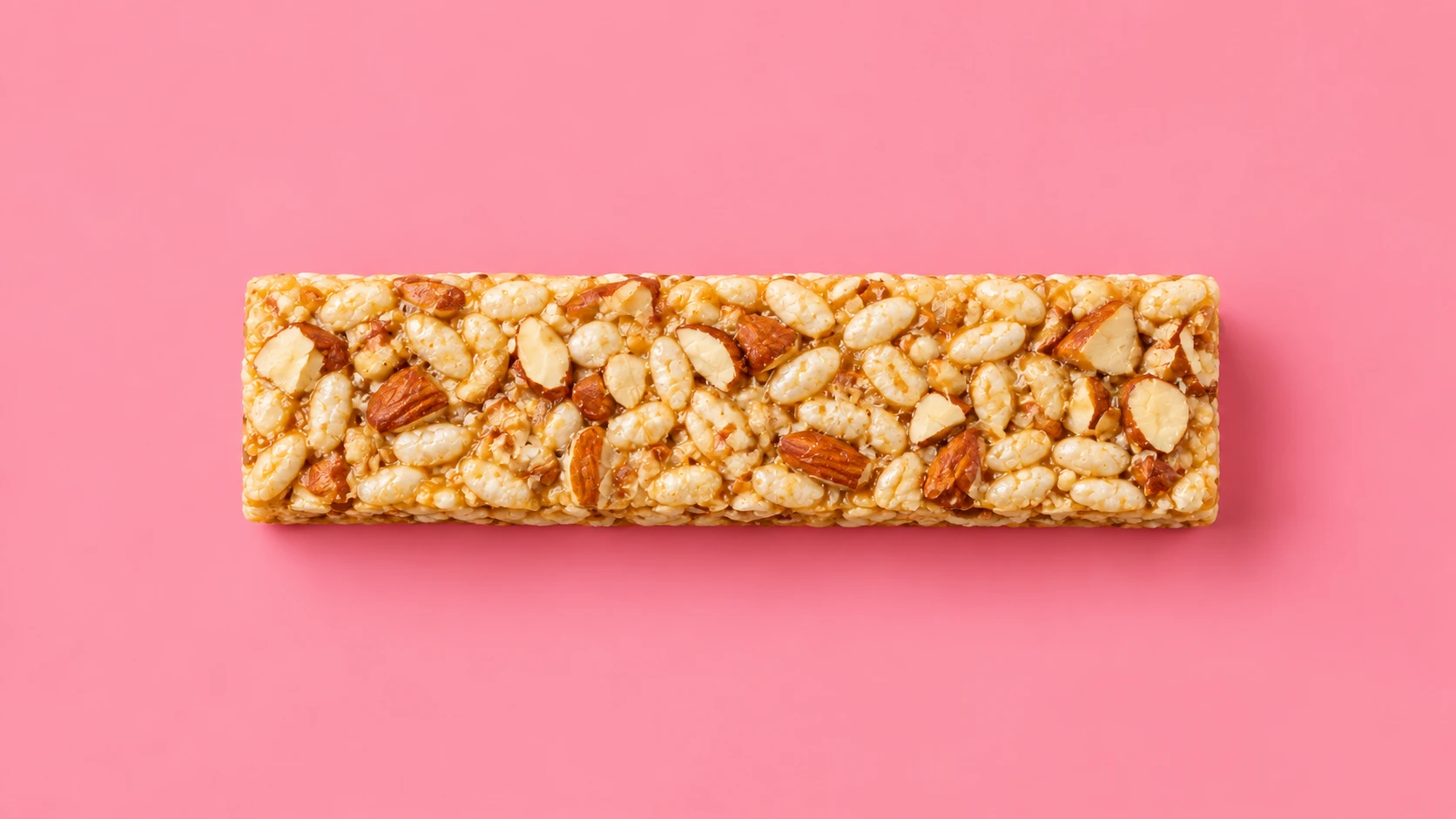
Try small additions: scatter a few grains on yoghurt just before eating, fold them into melted chocolate for bites that set, or use them as a crunchy salad topping. The bar recipes below genuinely contain puffed rice. Read the advice on using it in your bars before replacing shop-bought rice: the homemade fried version has a different texture and composition.
Keeping it fresh
Use on the day for the best crunch. Once completely dry, drained and cold, store airtight in a dry place at room temperature for up to a week. Do not seal while warm. Complete cooking, drying and frying in one session; if you stop before drying, cool the cooked rice quickly, ideally within an hour, refrigerate and use within 24 hours. Frying does not rescue cooked rice left at room temperature for hours.
In your homemade bars
Weigh after puffing, draining and cooling, not raw or merely cooked. Use only crisp grains. For a first attempt, make the minimum batch of 5 bars and keep the stated rice weight; do not add more to match the volume of shop-bought puffed rice.
Home-fried rice may be denser, less expanded and higher in fat. Your bars may have a different texture and hold: this is not an identical substitution. Recipe nutrition remains calculated using shop-bought plain puffed rice, without the oil absorbed here. For the closest match to the intended result, keep the purchased ingredient.