From almonds to cereal bars: what happens to their nutrients?
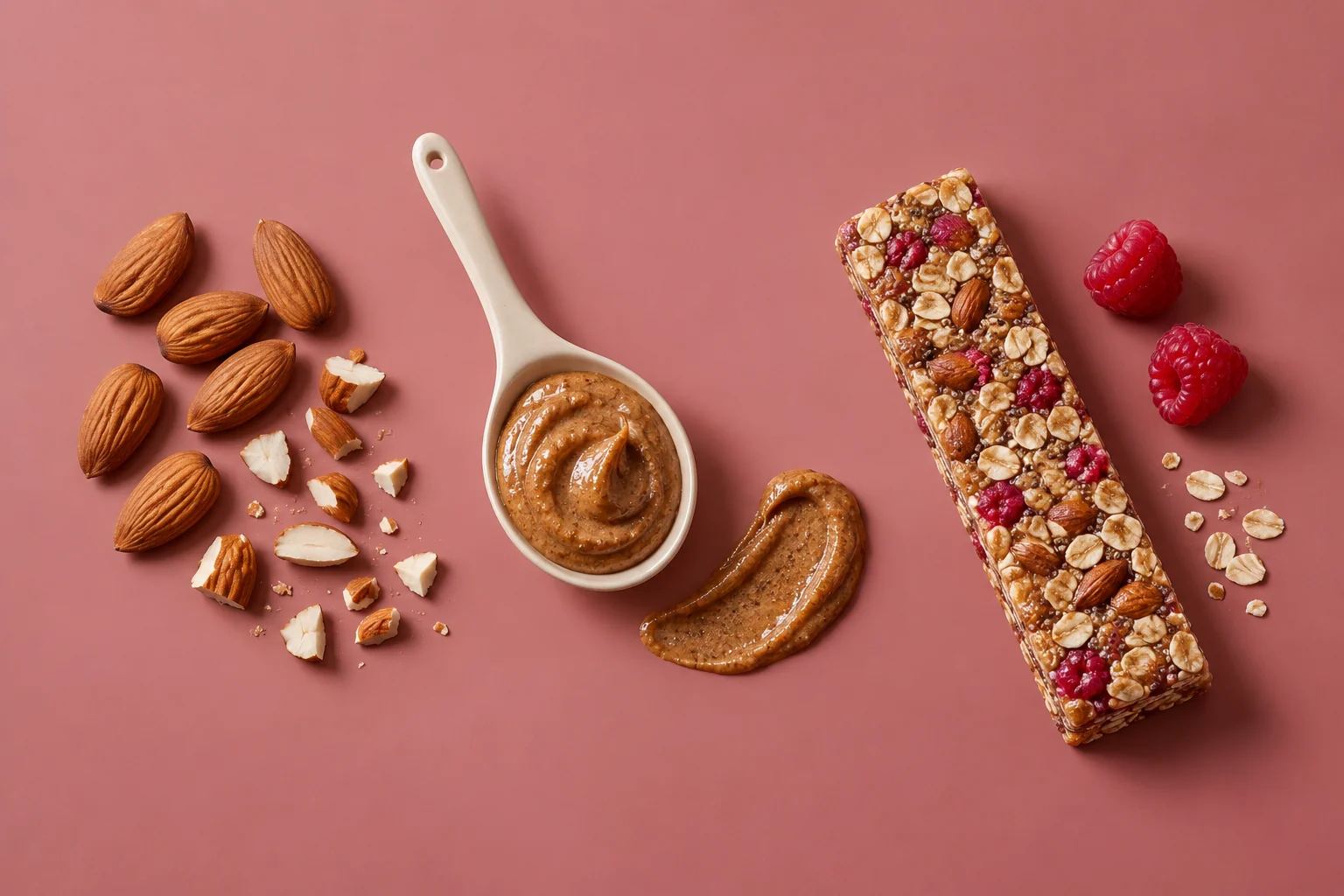
A handful of almonds on the worktop, a jar of almond butter, a few raspberries. You chop, mix and press everything into the tin. Soon the kitchen will smell of toasted oats and an afternoon snack in the making.
Between the ingredients you start with and the homemade cereal bar you take along, quite a lot will change. Crunch will meet softness, and the fruit will flavour the mixture. Nutrients are quieter: you cannot see magnesium when the tin comes out of the oven.
Yet it is still part of the recipe. To understand what stays, what may decrease and what becomes more accessible during digestion, let’s follow the almond all the way to the first bite.
From crunchy to creamy
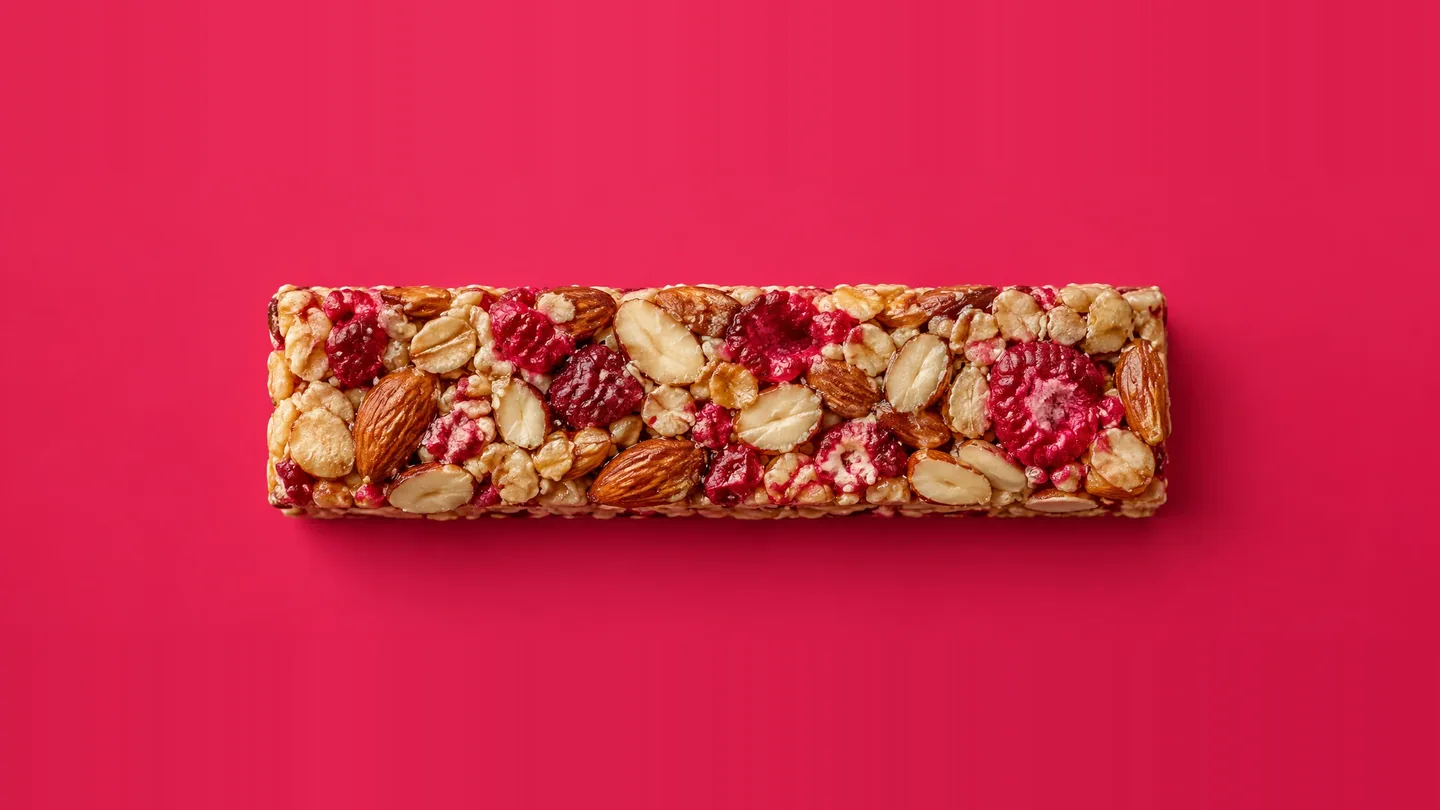
To follow that journey, let’s take Raspberry & almond , a homemade cereal bar recipe from miette., made with rolled oats and raspberries. Almonds join in two forms: chopped pieces for texture, and almond butter to help bind the mixture. Two textures that work together from the mixing bowl onwards.
Almond butter can seem a long way from the almond you nibble. But when it contains 100% almonds, the food processor has simply ground their substance. Fibre, protein, fats and minerals are still in the paste. The oil has not been extracted and the rest left behind.
One difference can appear before grinding even begins: the skin. White almond butter uses peeled almonds; whole almond butter keeps the brown skins. A study published in 2026 found less fibre and lower levels of some plant compounds after the skins were removed. Under the conditions studied, the main fatty acid profile remained largely unchanged.
In the kitchen, you will mostly notice a milder flavour with white almond butter and a more pronounced one with the whole variety. And if you make your own almond butter , you can watch that change in texture happen.
Once the almond butter and chopped pieces meet the oats, raspberries, honey and chia, the next stage begins: a spell in the oven.
What the oven changes… and what it leaves
For this cereal bar recipe, baking takes 22–25 minutes at 170°C. The edges colour and the mixture firms up. Those are the visible changes. Inside, nutrients do not all respond in the same way.
Magnesium, like other minerals, is generally not destroyed by the heat of ordinary home cooking. It can leave a food in discarded cooking water or juices. Here, no water is drained away: the ingredients stay together in the tin. We can therefore reasonably expect most of the almonds’ magnesium to remain in these bars.
The 2026 study points in the same direction: magnesium, calcium and phosphorus levels in Largueta almonds were broadly stable after the treatments studied.
Vitamins have a different sensitivity. Roasting can reduce vitamin E and some B vitamins, including B1. A 2017 study of different nuts shows that losses vary with the nut and the vitamin. Temperature and treatment time matter too.
Some may decrease without everything disappearing. And findings from almonds roasted on their own do not give a retention rate for a cereal bar containing fruit, oats and almond butter.
That also invites us to look at what happened before the mixing bowl. Almond butter may be made with already roasted almonds, even when you use it in a no-bake homemade bar recipe. Our article on raw and baked cereal bars explores that small distinction.
While the bar cools
The tin is out. The mixture now needs to cool before you cut it. It is a good moment to return to the quantities: they tell another part of the story.
For ten Raspberry & almond bars, the recipe uses 70 g of almonds and 100 g of almond butter. With 100% almond butter and ten equal portions, that means 17 g of almonds used per bar, on average. Both the pieces and the butter contribute to what you eat.
Those 17 g describe the starting ingredients. To estimate the magnesium in the whole bar, you would also need to account for the oats and chia seeds, among other ingredients. Almonds share the tin with foods that contribute to the recipe’s nutritional composition.
The weight after baking can change too. As water evaporates, the nutrients that remain are contained in a lighter mixture. Their amount expressed per 100 g may then rise, without the oven creating anything new.
On miette., nutritional values are estimates calculated from the ingredients. We have not analysed the finished bars in a laboratory or measured their vitamin retention.
And at the first bite?
The bar is ready. A piece of almond still offers some resistance, while the almond butter blends into the mixture. That difference in structure also matters during digestion.
In a whole almond, some of the fats remain enclosed within cells. Chewing and grinding open those structures to different degrees. A fine almond butter can therefore make fats more accessible.
A study involving 18 adults found more energy available to the body from almond butter than from whole almonds. Processing a food can therefore also change access to what it contains.
That finding concerns energy: it does not tell us that magnesium from almond butter is absorbed better. The amount present in a food and what digestion makes available are two different questions.
Keep pleasure in the recipe
With those points in mind, you can keep choosing your bars for their flavour and texture. A few small habits help you get the result you expect:
- Stir the almond butter before weighing it if its oil has separated. A smooth, even paste is easier to distribute through the mixture.
- Keep a few almond pieces for crunch. The butter helps bind the mixture; the pieces give each bite some texture.
- Follow the recipe’s baking time. Cutting it short at random can affect how the bars hold together; extending it exposes the ingredients to more heat and changes the texture.
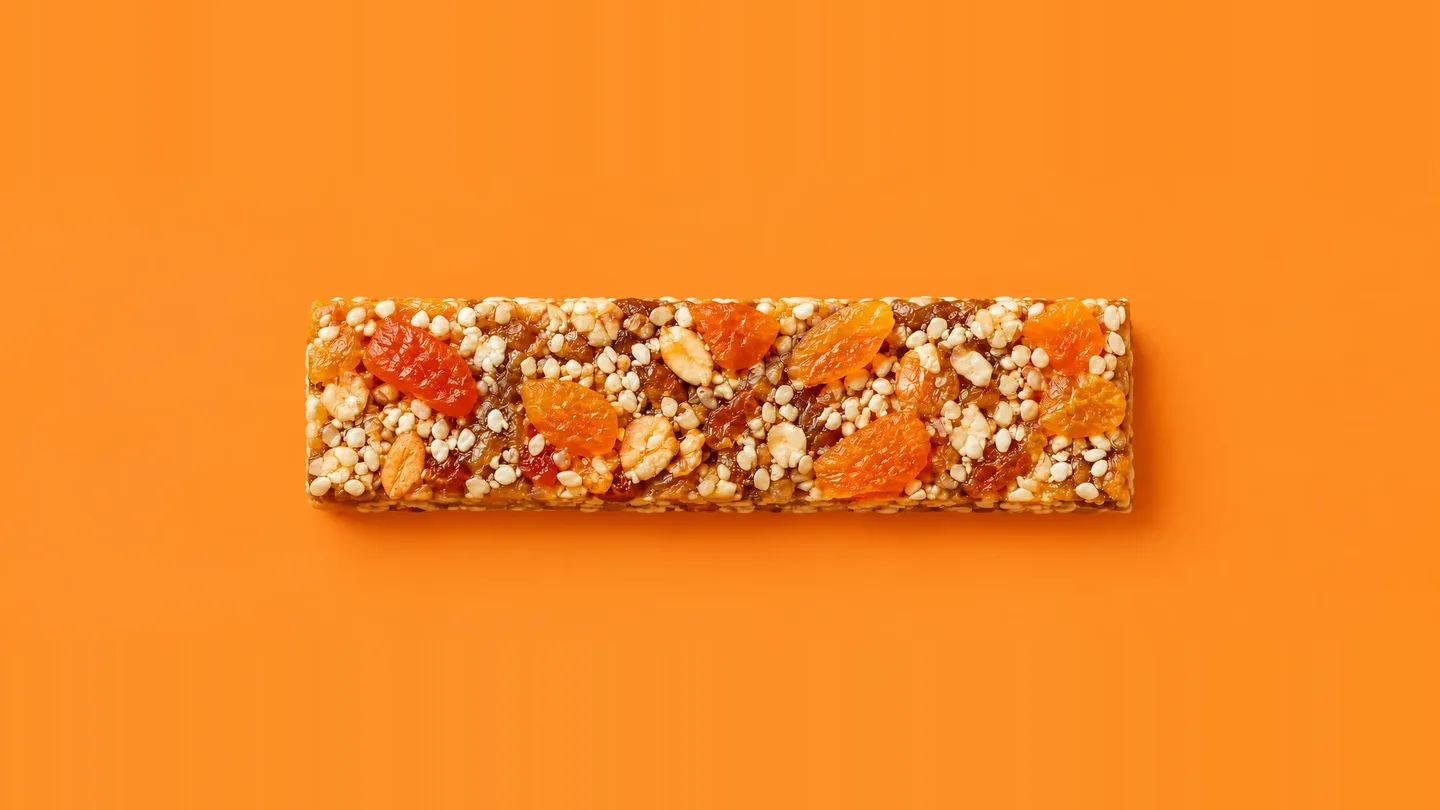
Next time, you could explore the softer texture of Apricot & lemon almond . These fruit bars combine dried apricots and almonds, with no rolled oats, and set in the fridge. Another flavour pairing, another way to give almonds their place.
In Raspberry & almond, almonds accompany the fruit’s tartness and feel creamy or crunchy from one bite to the next. Their form has changed, and some of their constituents may have changed too. Their magnesium is still part of your snack.